R4 calls for diplomatic solution to Mideast conflict, demands unimpeded Hormuz passage
Conference condemns Houthi escalation, attacks on Saudi civilians, infrastructure, commercial shipping in Red Sea
Published October 24, 2026
- R4 rejects restrictions on navigation, demand safe, unimpeded passage.
- Warns maritime disruption threatens global energy, fertiliser, food supplies.
- Call for Palestinian state on June 4, 1967 lines, with East Jerusalem as capital.
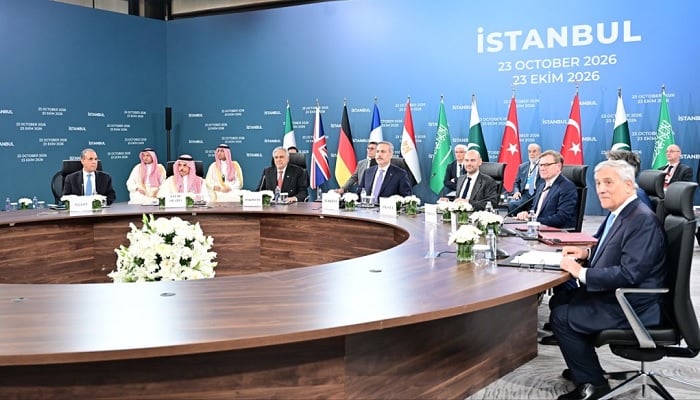
Pakistan, Turkiye, Egypt and Saudi Arabia have thrown their weight behind diplomatic efforts to end the US-Israeli conflict with Iran, endorsed the Islamabad Memorandum of Understanding (MoU) and called for the immediate restoration of safe and unhindered shipping through the Strait of Hormuz.
In a joint statement following a meeting in Istanbul on October 23, the four countries' foreign ministers called for regional disputes to be resolved through diplomacy, warning against further escalation and disruption to vital maritime routes.
They said their joint efforts were aimed at advancing peace and stability in the region and beyond, in accordance with the principles and purposes of the United Nations Charter.
R4 calls for diplomacy to resolve Iran conflict
Addressing the conflict involving the US, Israel and Iran and tensions around the Strait of Hormuz, the ministers stressed that the situation must be addressed through dialogue and diplomacy. They also called for an end to attacks on civilians and civilian infrastructure, including vessels.
“The Ministers underlined the urgent need to address this conflict only through dialogue and diplomacy,” the joint statement said.
The ministers expressed support for the Islamabad MoU and welcomed continued diplomatic efforts to prevent further escalation. They reaffirmed their commitment to achieving a lasting negotiated solution.
The statement also stressed the importance of freedom of navigation, permanent maritime safety and security, and the protection of navigational rights and freedoms.
The ministers warned that disruption to sea lanes threatened the security and prosperity of countries by obstructing global supply chains and the movement of energy, fertiliser and food.
Such disruption, they said, affected vulnerable populations in the region and beyond and required collective efforts by the international community.
“The Ministers also rejected any measures or restrictions that impair lawful navigation,” the statement said, calling for the “swift and full resumption of safe, secure and unimpeded passage through the Strait of Hormuz”.
R4 demands end to Israeli violence, backs Palestinian state
The four countries described the Israeli occupation as a fundamental source of instability in the region and beyond, saying Israeli policies had created a deep sense of injustice in global public opinion.
They called for the early implementation of a two-state solution in accordance with relevant United Nations resolutions.
The ministers reiterated their support for the legitimate rights of the Palestinian people, including their inalienable right to self-determination and to establish an independent, sovereign, viable and contiguous state.
The proposed State of Palestine should be based on the June 4, 1967 lines, with East Jerusalem as its capital, in accordance with relevant UN Security Council resolutions, the statement said.
The ministers also called for an urgent end to ongoing Israeli violence and attempts to alter Jerusalem's legal and historical status. They urged an end to further destruction and the humanitarian tragedy in Palestine.
They condemned past and current Israeli settlement activities in the occupied West Bank and Jerusalem, as well as settler violence against Palestinians.
The statement underlined the urgent need for an uninterrupted flow of humanitarian assistance into Gaza and for reconstruction in the territory.
Ministers condemn Houthi attacks on Saudi Arabia, shipping
On Yemen, the four countries condemned what they described as an unacceptable escalation by the Houthi militia, saying it had deepened humanitarian suffering.
They also condemned continued Houthi strikes against Saudi Arabia, particularly attacks targeting civilians and civilian infrastructure, as well as attacks on commercial shipping in the Red Sea and the Bab al-Mandeb Strait.
The ministers expressed full solidarity with the government of Yemen and Saudi Arabia.
They called on the Houthi militia to immediately cease all military actions, threats and attacks and return to the political process in good faith.
The four foreign ministers agreed to maintain close consultation and coordination on the issues addressed in the joint statement.